When you see a sale marked “20% off” or “30% off,” it helps to know exactly what that discount means. A quick calculation can tell you how much you are saving and, more importantly, how much you will actually pay.
The good news is that you do not need complicated math. With one simple percentage formula, you can calculate discounts on clothes, electronics, groceries, subscriptions, and almost anything else sold at a reduced price.
What Is a Discount?
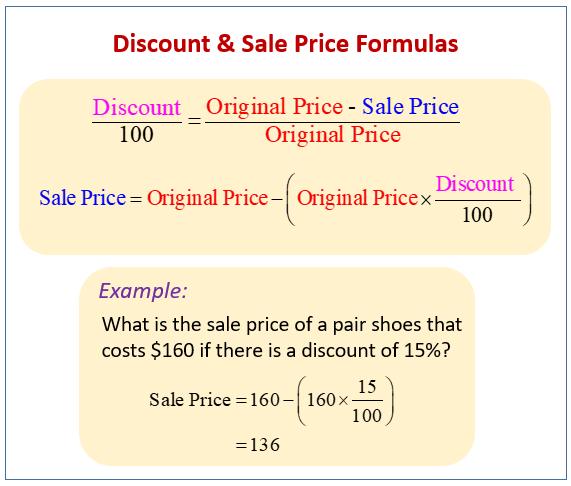
A discount is a reduction in the original price of a product or service. Businesses usually show discounts as percentages, such as 10%, 20%, 30%, or 50% off.
A 20% discount does not mean you pay 20% of the original price. It means you save 20% and pay the remaining 80%.
Basic Discount Formula
The easiest way to find a discount is to multiply the original price by the discount percentage.
Discount Amount = Original Price × (Discount Percentage ÷ 100)
Let’s say a pair of shoes costs $100 and the store is offering 20% off.
$100 × (20 ÷ 100) = $20
The discount is therefore $20.
How to Calculate the Final Price After a Discount
Once you know the amount being discounted, finding the final price is simple. Subtract the discount from the original price.
Using the same example:
$100 − $20 = $80
The shoes originally cost $100, but after the 20% discount, you would pay $80.
How to Calculate a Discount Step by Step
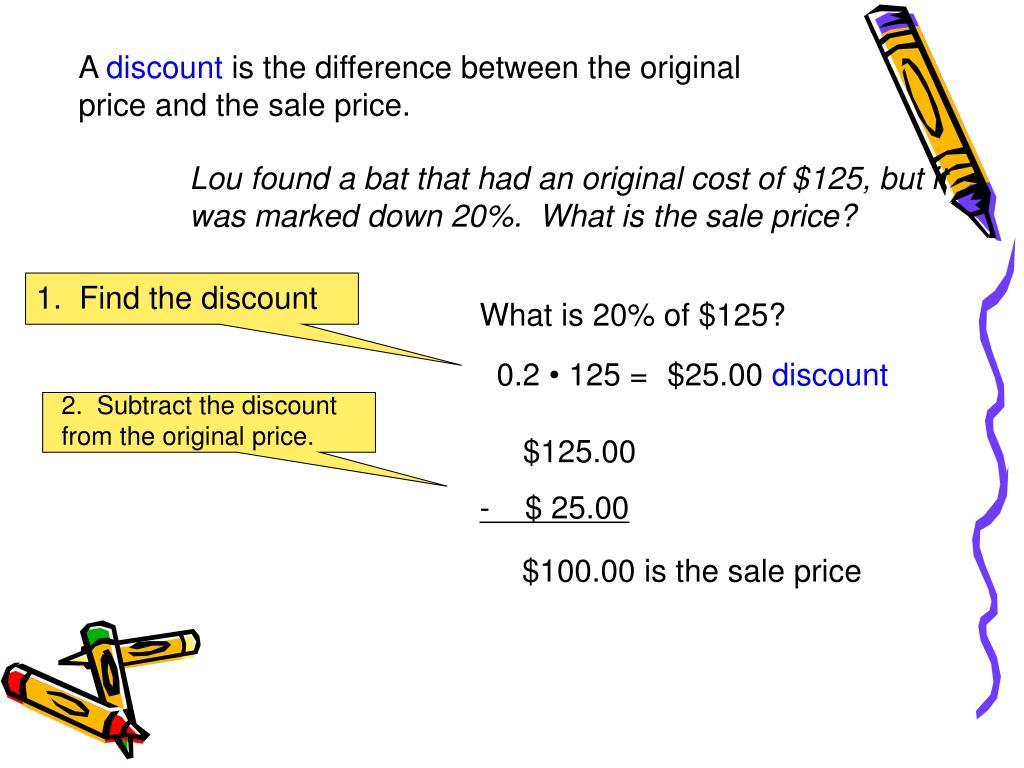
Consider a jacket with an original price of $150. The store has marked it down by 30%.
- Divide 30 by 100 to convert the percentage to a decimal: 0.30.
- Multiply $150 by 0.30.
- The discount comes to $45.
- Subtract $45 from the original $150.
- The final price is $105.
So, the 30% discount saves you $45, and the jacket costs $105 after the reduction.
Use an Online Percentage Calculator
Doing one discount calculation by hand is easy. If you are comparing several products, however, an online calculator can save you some time.
You can use the Percentage Calculator on ToolRava to work out common percentage calculations.
Knowing the formula is still useful because it gives you a quick way to check whether the calculator’s answer makes sense.
How to Calculate a 10% Discount Quickly
A 10% discount is particularly easy to calculate. Take the original price and divide it by 10.
For example, suppose something costs $70.
$70 ÷ 10 = $7
You save $7, so:
$70 − $7 = $63
The final price is $63.
How to Calculate a 50% Discount
A 50% discount means you are saving half of the original price.
For a product priced at $200:
$200 × 50% = $100
You save $100 and pay the other $100.
When you see something advertised as half price, this is essentially the calculation you are making.
How to Compare Different Discounts
A higher percentage does not always mean you will save more money.
Imagine one store offers 30% off a $200 product, while another offers 50% off a $60 product. The actual savings are:
30% of $200 = $60
50% of $60 = $30
The first offer saves you more money, even though its discount percentage is smaller.
When comparing deals, calculate the actual saving and the final price rather than looking at the percentage alone. You can also learn more about related calculations in our guide to percentage difference.
Discounts and Additional Charges
The price after a discount may not always be the final amount you pay at checkout.
Depending on the product and where you are buying it, additional costs such as taxes, delivery fees, or service charges may be added.
For this reason, check the final checkout price before deciding which offer gives you the better deal.
Common Discount Calculation Mistakes
Discount calculations are simple, but these mistakes are fairly common:
- Using a price other than the original price when calculating the discount.
- Subtracting the wrong amount from the original price.
- Confusing the money saved with the final price.
- Assuming the highest discount percentage is automatically the best deal.
- Forgetting about taxes, delivery costs, or other additional charges.
Frequently Asked Questions
How do I calculate a discount?
Multiply the original price by the discount percentage divided by 100. The answer is the amount you will save.
How do I find the final price after a discount?
First calculate the discount amount. Then subtract that amount from the original price. The result is the price after the discount.
Can an online calculator calculate discounts?
Yes. The Percentage Calculator on ToolRava can help with percentage calculations used when working out discounts.
Is a 20% discount the same as paying 20% of the original price?
No. A 20% discount means you save 20% of the original price and pay the remaining 80%.
How can I compare two sale offers?
Calculate both the amount saved and the final price for each offer. This gives you a better comparison than looking at the advertised percentages alone.
Final Thoughts
Calculating a discount comes down to two basic steps: find the amount being taken off, then subtract it from the original price.
Once you are comfortable with the formula, you can quickly check sale prices without relying entirely on the advertised discount. For repeated calculations, an online percentage calculator can make the process even faster.